The first iteration of the Media Industrialization Professionalization Workshop kicked off in January 2026, offering students a unique opportunity to learn from successful individuals in the entertainment industry. The one-credit course featured a diverse group of guest lecturers, varying across fields, ages, backgrounds, and experiences. Bringing both focused and detailed pieces of useful advice as well as personal lessons and anecdotes, each speaker contributed to the holistic understanding of the entertainment industry the students developed by the end of the semester.
“I was really excited to be able to have the opportunity to talk with professionals and people who are actually working through what we talk about in film courses,” senior Sophie Weiss, who majored in Film and Media Studies with a concentration in production, said. “I think that had this existed when I was a freshman, it would have made my career decision process just a lot less stressful.”
Professor Colin Burnett, director of the Film and Media Studies program, created the workshop in an effort to supplement students’ education with “a kind of practical guide on how to actually just go to the industry and operate as a professional,” he said.
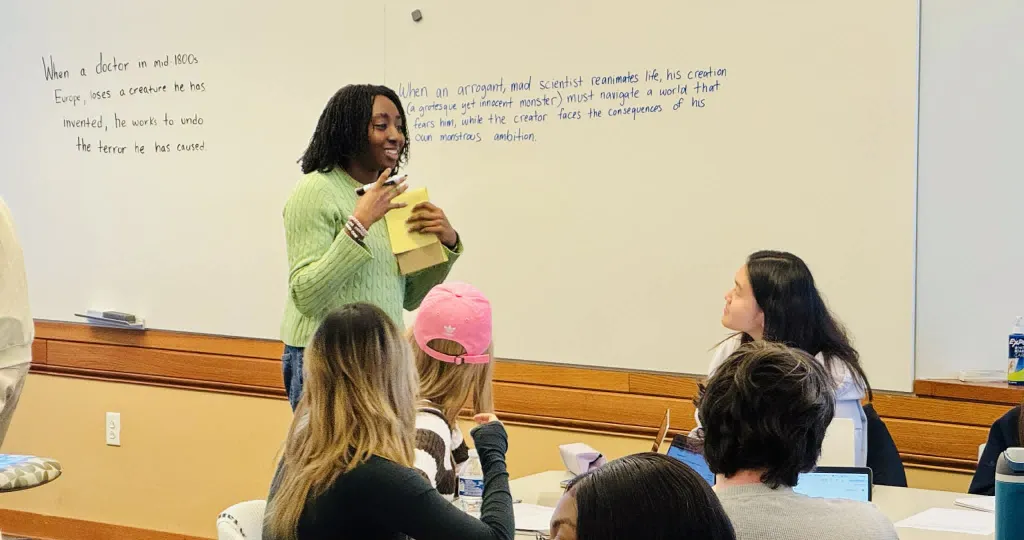
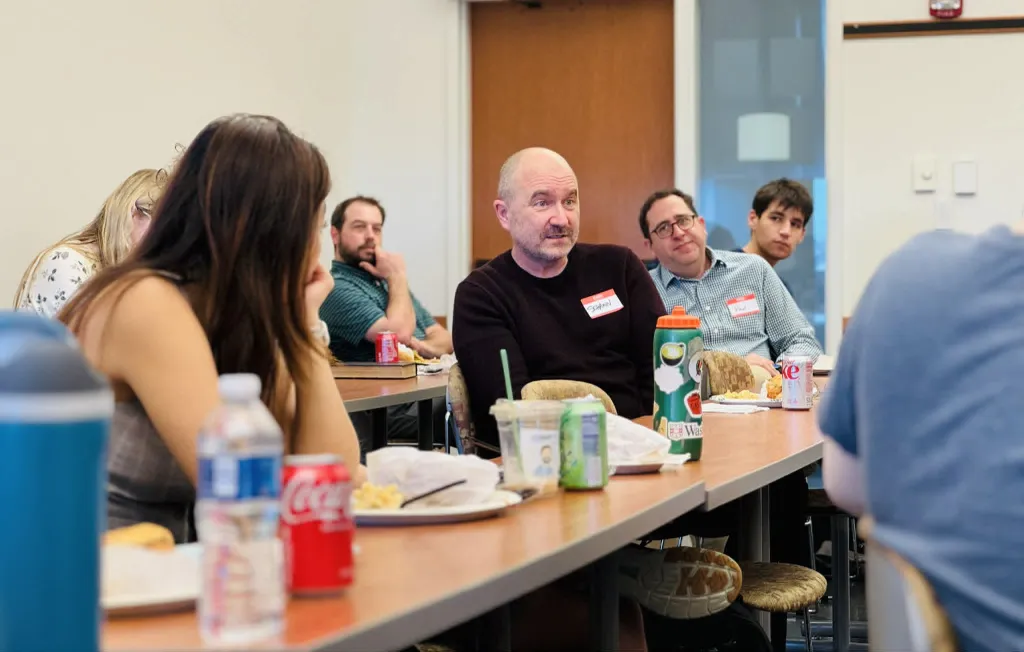
Taking place across five Fridays throughout the semester, the one-credit class included an hour lunch and Q&A followed by a three-hour workshop led by the session’s guest. Moreover, the class provided students with the opportunity to interact personally with each speaker, ask questions during a lecture segment that explained both the personal journey of each speaker and a technical discussion of their jobs, and participate in an interactive workshop that developed skills in the respective field.
The semester’s lineup included: documentary producer and president of Stick Figure Productions, Jamie Schutz; writer Carolyn Kras; producer and head of film at Brownstone, Alison Small; preservationist and head of global delivery at Amazon Studios, Schawn Belston; and film festival programmer and production supervisor at Netflix Animation Studio, Alexandra Mitchell.
The class helped students like freshman Hannah Dorval feel more confident in approaching a constantly shifting field like the film industry and better understanding how to do so in a pragmatic and realistic way.
“Before, I thought a job in the industry was less attainable than anything else I could come up with in my head. Meeting the speakers opened my eyes to the feasibility of it all,” Dorval explained. “I feel more passion-driven, I would say… These people really have a passion for creativity and collaboration. And their dreams came true, so mine can too.”
Senior Cole Bernstein, who majored in Film and Media Studies and English, especially appreciated the workshop’s unfiltered insights into an industry full of career options that oftentimes may feel more elusive and precarious than a path in careers pertaining to medicine or law might be.
“I have a much clearer picture of not just the hierarchy of the film industry, but how you actually can go from one rung of the ladder to another, in a way that I feel like for maybe other majors is a little more clear,” Bernstein said.
The idea for the workshop began around 2018 after Burnett witnessed the impressive enthusiasm by which students engaged with and reacted to a guest lecture by Brownstone producer and WashU alumna Alison Small. Students lined up after the lecture to talk to Small, something that particularly struck Burnett.
Lingering in his mind for a few years, the idea was actualized when a fruitful opportunity finally arose: An interested donor joined the conversation and became the missing piece of the puzzle. Paul Engelberg, a delivery specialist at Amazon Prime Video, made Burnett’s vision for an intimate industry workshop come true.
Engelberg studied at WashU for two years before transferring to the University of Southern California. Engelberg remained involved in the WashU community, and the workshop became the perfect opportunity for him to give back to current students who experience similar uncertainty in their college careers.
“I didn't actually graduate from WashU, I was there for a year and a half, and it was kind of the formative time in my life,” Engelberg said.
Small was the third guest in the course. She had lectured at WashU several times before, and jumped at the opportunity to teach and challenge students.
“I always find that you learn more through doing than sort of just sitting there, like in a lecture… I wanted to break down the barrier of entry for students, for WashU students, in terms of having a real job in the entertainment industry,” Small said.
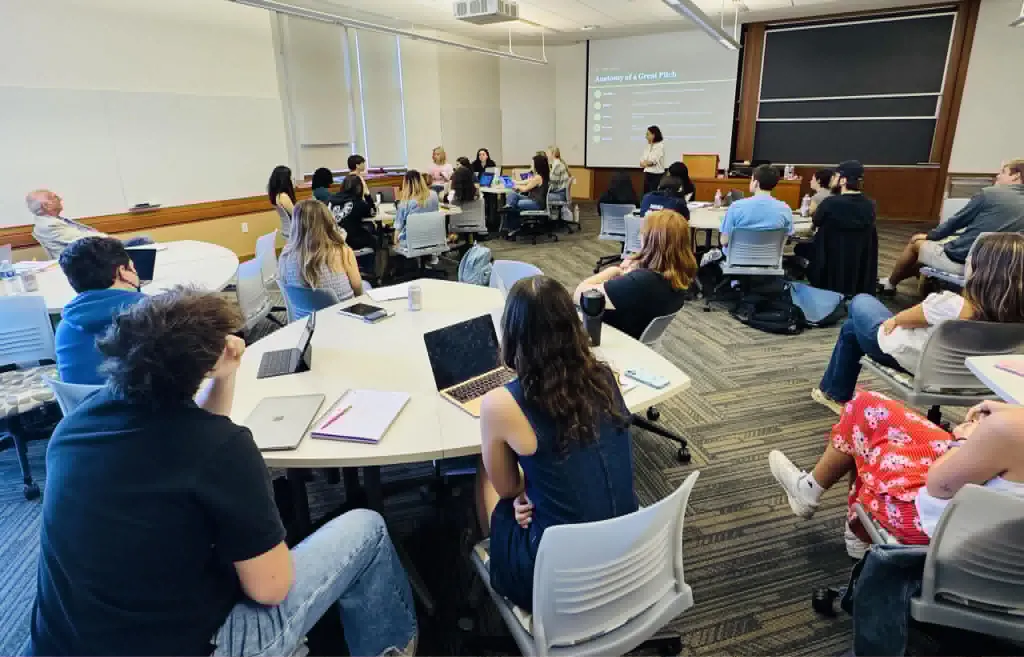
Small led students through a simulation of both pitching and buying films: groups were given the pitch decks for three upcoming feature films and were tasked with pitching the film to a group of potential buyers and producers. During Mitchell’s workshop, on the other hand, each group received a summary for a short film and were tasked with spending a hypothetical $1,000 budget on a film festival strategy.
“I think the workshops really helped to form my viewpoint about how connecting isn't about just advancing your career, but also learning through their experiences,” Dorval said.
Before Mitchell worked at Netflix Animation Studios, she was the Film Competition Director at the Austin Film Festival. Her interest in pursuing such a career began in Burnett’s French Film Culture course where she first learned about film festivals in the international market.
“His invitation meant truly kind of everything,” Mitchell said. “It’s nice to come back and be able to talk about what I’ve learned since WashU and share that with current WashU students.”
The course will be offered again next spring when students can look forward to a new slate of speakers.
“This class introduced me to so many people from freshmen to seniors. And I thought that was like a really big bonus to me… seeing the diversity of not only our experiences as students, but also in what roles we want,” Weiss said.